5 Things We Learned at the Lead Tourism for Good Speaker Series with Protect Our Winters Canada
How is climate change shaping outdoor recreation, community life, and local business in Banff and Lake Louise—and how can we work together to create solutions?
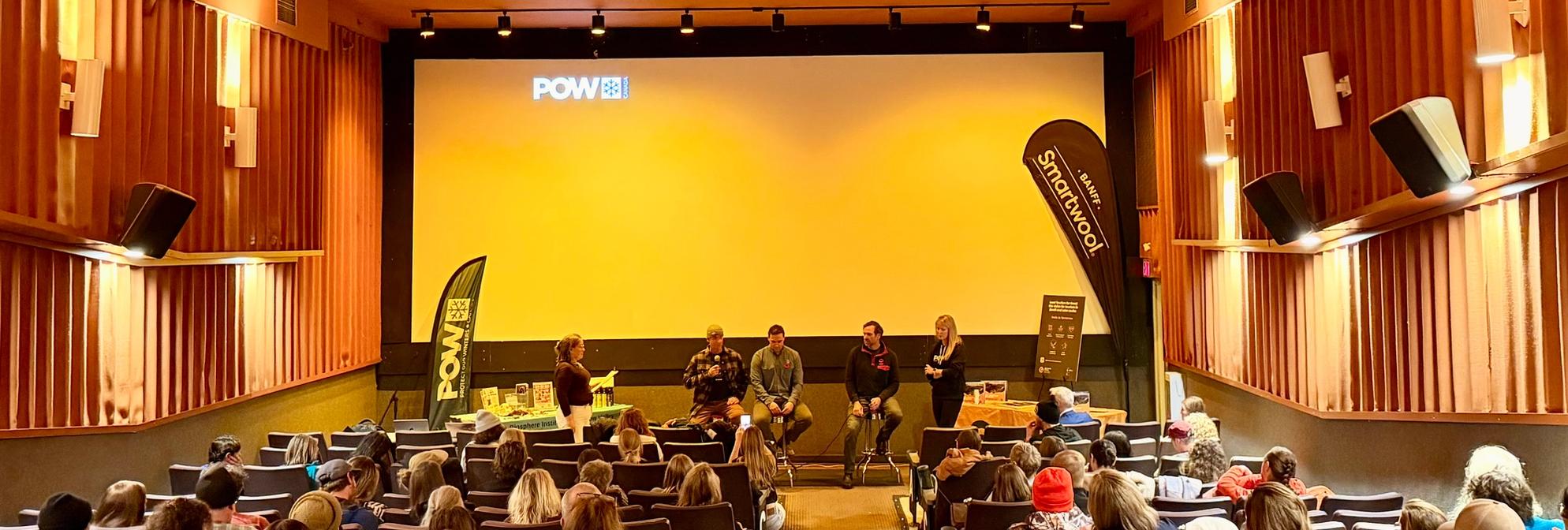
At this fall’s Lead Tourism for Good Speaker Series with Protect Our Winters (POW) Canada, four community leaders took to the stage for an honest and deeply personal conversation about climate impacts in the Bow Valley.
With lived experience, humour, data, and real-world examples, Matthew Widmer (Co-owner, Wild Life Distillery), Dave MacDowell (President, Smartwool Banff & Whistler), Kelly VanderBeek (POW Athlete Ambassador; Olympian), and Andre Quenneville (General Manager, Mt. Norquay) explored how climate change is affecting everything from local operations to outdoor sports—and what it means for the future of the place we all love.
Here are the five key takeaways from the Speaker Series:
Climate anxiety is real and widely felt across the community
Early in the conversation, panelists acknowledged something many people experience but often don’t say out loud: climate anxiety is real, and it’s affecting residents, workers, athletes, and business owners alike.
Speakers shared stories of summers filled with smoke, shrinking windows for recreation, and the fear of watching wildfires threaten communities like Jasper. Workers described the difficulty of running sightseeing or via ferrata programs when visibility drops to nothing. Athletes recounted competing in unsafe conditions, from heatwaves at global events to snow that was too soft to safely land on.
As one panelist reflected, young people often ask: “How do you stay optimistic when you understand what’s happening?”
Climate anxiety isn’t a sign of hopelessness—it’s a sign of how deeply people care about this place.
Progress is happening—and faster than many expected
Despite the weight of the topic, the conversation offered real optimism. Several speakers highlighted the pace of change in renewable energy, battery storage, and clean-technology innovation—advances moving far quicker than many experts predicted even a few years ago.
One speaker noted that after seeing the latest data, “The clean-energy train is moving—and faster than people think.”
At the same time, collaboration between organizations such as Parks Canada, the Town of Banff, and community groups is improving. While climate impacts continue to accelerate, so do the solutions.
Climate impacts are already reshaping daily life, recreation, and business
The most vivid moments of the evening came from lived experience. Panelists spoke about the ways climate change is already affecting the Bow Valley:
- Summers of thick smoke that limit visitor experience and worker safety
- January rain disrupting winter operations
- Agricultural shifts affecting grain quality and supply chains
- Economic uncertainty for seasonal businesses
- Fire seasons that now stretch into spring and fall
- Olympic events moved or altered due to unsafe heat
- Local athletes injured on deteriorating snow conditions
One speaker described returning to Jasper after the wildfires and feeling the emotional weight of seeing beloved places changed. Another shared that guests increasingly choose where to travel based on climate events.
Climate change isn’t theoretical for mountain communities—it’s here, shaping daily decisions.
"Experience is a must; sustainability is a nice-to-have," one panelist said—highlighting how climate change is altering what “experience” even means.
Community connection and brave conversations matter
A powerful theme from the evening was the importance of talking about climate—even when it feels uncomfortable. Several panelists admitted that speaking publicly about climate issues can feel polarizing. Some shared the fear of posting online or even wearing climate-related apparel in public.
But moments of vulnerability turned into moments of connection. Audience members echoed the same concerns, revealing how many people want to talk about climate—they just need a safe place to start.
Speakers emphasized that:
- Local advocacy can influence meaningful change
- Showing up matters, even when you’re nervous
- Compassion and empathy must guide difficult conversations
- Listening can be as important as speaking
- Community is one of the strongest antidotes to climate anxiety
As one panelist put it, “We need to move the big dial—not the microwave dial.” Doing that requires community.
Practical, local solutions are already underway — and tourism is playing a part
Finally, the discussion highlighted the real work already happening across the Bow Valley — work that shows momentum building, and how tourism is contributing to the solutions.
- FireSmart and fuel-reduction projects in partnership with Parks Canada
- Long-range wildfire planning that continues to evolve year over year
- Neighbourhood-level preparedness informed by Jasper’s wildfire experience
- Increased collaboration between businesses, community agencies, and local organizations
- Better visitor-flow data helping partners coordinate decisions during busy periods
- More conversations around EV charging and sustainable transportation
- Businesses adapting operations to be more climate-resilient
Tourism plays a role in this progress — by bringing partners together, supporting the local economy, investing in preparedness and sustainability initiatives, and helping amplify awareness and responsibility among the millions of people who visit each year.
Panelist Dave MacDowell from Smartwool Banff and Whistler shared: “We've seen firsthand how wildfires have impacted our community and the places we love, that's why we are standing up for change and we're inviting everyone to do the same. Let's protect what we love together.”
While these steps may seem incremental, they represent steady, meaningful progress—and a growing commitment across the community to take action.
The Lead Tourism for Good Speaker Series aims to bring people together, spark meaningful conversations, and inspire change.
Through engaging discussions with industry experts, local leaders, and changemakers, we are creating opportunities to explore innovative ideas and solutions that align with our vision to Lead Tourism for Good.
Thank you to everyone who joined in on the conversation!