Stories from the Trails: Growing Indigenous Representation on the Slopes in Banff and Lake Louise
The first step on a new path is often an open door. Here in the Canadian Rockies, a new initiative is helping create pathways for Indigenous participation in the ski industry.
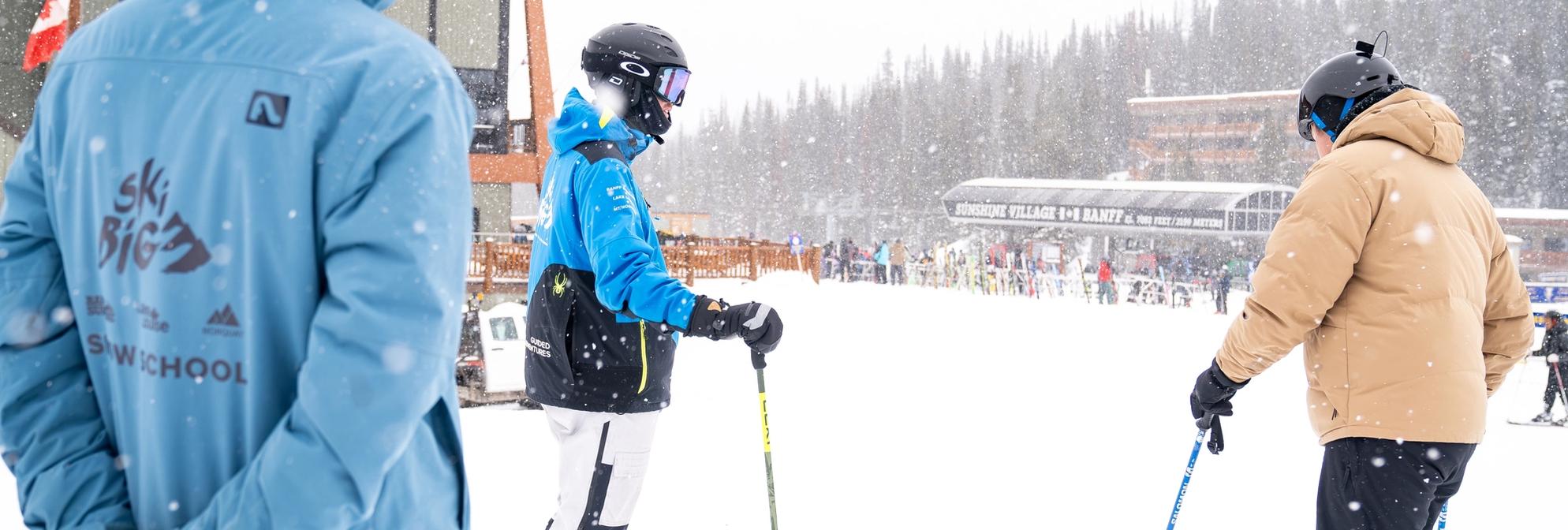
Launched by SkiBig3 during the 2025–2026 winter season, the Indigenous Residency Scholarship was delivered in partnership with Nonstop Snow, a national ski and snowboard instructor training organization.
The initiative was a collaborative effort with Nonstop playing a key role in providing instruction, training support, and helping bring the scholarship to life. The pilot program helps Indigenous participants earn their ski instructor certification, opening the door to a career in the ski industry.
The four-week residency covered accommodation, meals, lift access, and Level 1 ski instructor certification, removing financial barriers and allowing two Indigenous participants to focus on developing new skills and explore career opportunities.
Dylan Murray of Asin'iwa'chi Niy'yaw Askiy (Rocky Mountain People) says the scholarship was an opportunity to strengthen his skills while helping create a future where more Indigenous people see themselves represented on the slopes. As the founder of Indigenous Backcountry Training, Dylan already works to connect people with the outdoors and saw the residency as another step toward building Indigenous leadership in snow sports.
Building pathways, not just careers
While the scholarship helped Dylan strengthen his own skills, he believes its greatest impact lies in creating visible pathways for other Indigenous Peoples to enter the ski industry.
"I can probably count on one hand how many Indigenous guides or ski instructors I know," Dylan says. "We're few and far between. That's why opportunities like this are so important."
The residency also created opportunities beyond Dylan's own experience. He watched fellow participant Mataio Bright grow in confidence as he developed new skills throughout the program. Mataio, who is Métis, has now been offered a position as a Level 1 ski instructor at Mt. Norquay for the 2026–2027 winter season—a tangible example of the employment pathway the scholarship is designed to create.
"Seeing Mataio come out of his comfort zone over those four weeks was super inspiring," Dylan says. "These are the stepping stones to having more Indigenous representation throughout the industry."


These are the stepping stones to having more Indigenous representation throughout the industry.
Dylan Murray, Founder of Indigenous Backcountry Training
Removing barriers
Dylan says one of the most meaningful parts of the scholarship was seeing multiple organizations and local businesses work together to create an opportunity that was accessible from the beginning. By covering the costs of accommodation, meals, lift access, and certification, barriers that can prevent Indigenous Peoples from pursuing careers in snow sports were removed.
"It was really inspiring to see the community support behind an initiative like this," Dylan says. "Nobody was asking for anything in return. They simply wanted to help create opportunities."
For Dylan, that kind of collaboration reflects what reconciliation can look like in practice.
"It shouldn't only be the work of Indigenous people to uplift Indigenous people," he says. "We are part of it, but non-Indigenous people and businesses have an important role to play."
Pete Woods, President of SkiBig3, says the scholarship reflects the organization's long-term commitment to making the ski industry more inclusive.
"We're proud to be part of a program that opens the door to careers in the ski industry," says Woods. "We learned a lot from this first year, and we hope it's the start of creating more opportunities for Indigenous instructors in the future."
The scholarship is one example of how Banff and Lake Louise are advancing the destination's vision to Lead Tourism for Good. Guided by the Indigenous Connections Trail to Tomorrow, the destination is strengthening relationships with Indigenous Peoples, communities, and businesses to advance Indigenous tourism and create more opportunities for Indigenous Peoples within the industry.
Inspiring the next generation
While the scholarship is helping participants gain certifications and experience today, its impact reaches far beyond a single season. By increasing Indigenous representation and creating meaningful career pathways, initiatives like this help ensure more Indigenous youth can see a place for themselves in the ski community and industry.
"All it takes is for one young person to read a story like this and think, 'I didn't know this existed,'" Dylan says. "That's how change starts."
As Banff and Lake Louise continue advancing Lead Tourism for Good, initiatives like SkiBig3's Indigenous Residency Scholarship demonstrate what’s possible when barriers are removed and opportunities are created. While there is still more work to do through continued learning, relationship-building, and collaboration, programs like this represent an important step forward.
Dylan Murray is a Basic Avalanche Educator, Indigenous education teacher, and ski guide in training based in Revelstoke, BC. Originally from central Alberta, his passion for rivers and mountains led him to pursue a career in guiding. As founder and Program Director of Indigenous Backcountry Training, he works to increase Indigenous participation in backcountry recreation through education, cultural programming, and mentorship. His work bridges Indigenous knowledge, avalanche safety, and outdoor leadership to foster more inclusive and culturally informed mountain communities

