The Ultimate Guide to Running in Banff and Lake Louise
From alpine trails to paved roads, Banff running brings you into the heart of the Canadian Rockies with more than 60 routes to choose from. Whether you like pounding the pavement or venturing into the backcountry, you’ll find terrain for every level, with a must-do highlight being the annual Banff Half Marathon. Here’s everything you need to know about running adventures in the park.


Spread across 1,600km (1,000 miles), Banff running trails will challenge your skills and reward you with remarkable mountain views, lakes and wildlife sightings.
Banff running offers everything from flat multi-use paths with scenic lookouts to technical trail runs that bring you high into mountain passes. This guide helps you plan your trip, including where to run, what to pack, and how to get to the trailhead.
What’s in this guide?
- Running in Banff National Park: What’s it all about?
- Best time to run in Banff National Park.
- Where to run in Banff National Park.
- Why book a guided trail run in Banff National Park.
- What to pack and wear when running in Banff National Park.
- What to know before running in Banff National Park.
- Wildlife viewing and safety tips while running in Banff National Park.
- How to get to your running trail in Banff National Park.
- How to recover from your run in Banff National Park.


Running in Banff National Park: What’s It All About?
- Seasons to visit: Year-Round.
- Trail area: 1,600km (1,000 miles).
- Parks Canada trails: 68.
- Most elevation gain: Cory and Edith Pass Trail (915m / 3,000 feet of elevation gain).
- Ability levels: Beginner, intermediate, and expert.
- Indigenous lands: Territories of the Treaty 6, 7 and 8, Rocky View Métis District, and the Métis Homelands.
Banff running brings you to distant alpine peaks, through wildflower-filled meadows, and along turquoise lakes. Under the power of your own two legs, follow the contours of the lakeshore to forest, then up to mountain passes and high onto a mountaintop.
On route, you’ll experience some of the most iconic landmarks and remarkable terrain the Canadian Rockies have to offer.


Best Time to Run in Banff National Park
Banff and Lake Louise shine at all times of the year, and you can run through every season. Running in Banff is at its best in the summer and fall when trails are mostly snow-free and you can run deep into the mountains. In the spring and fall, expect to need traction devices, warm clothes, and to stay a bit closer to the townsite and your accommodation.
Running Banff in Summer
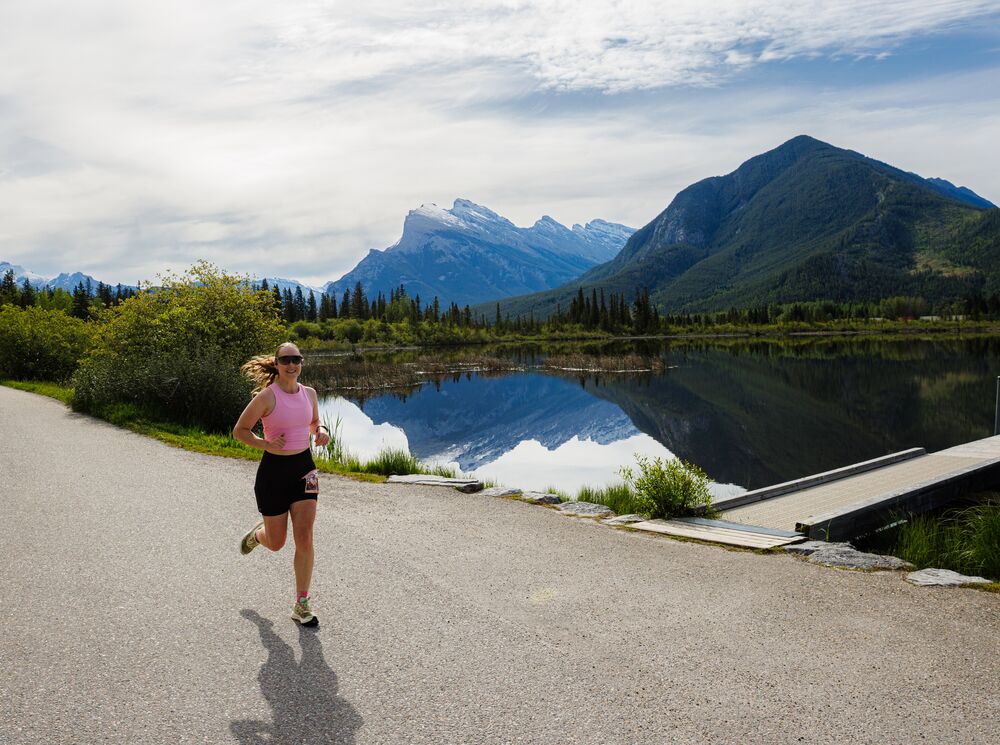
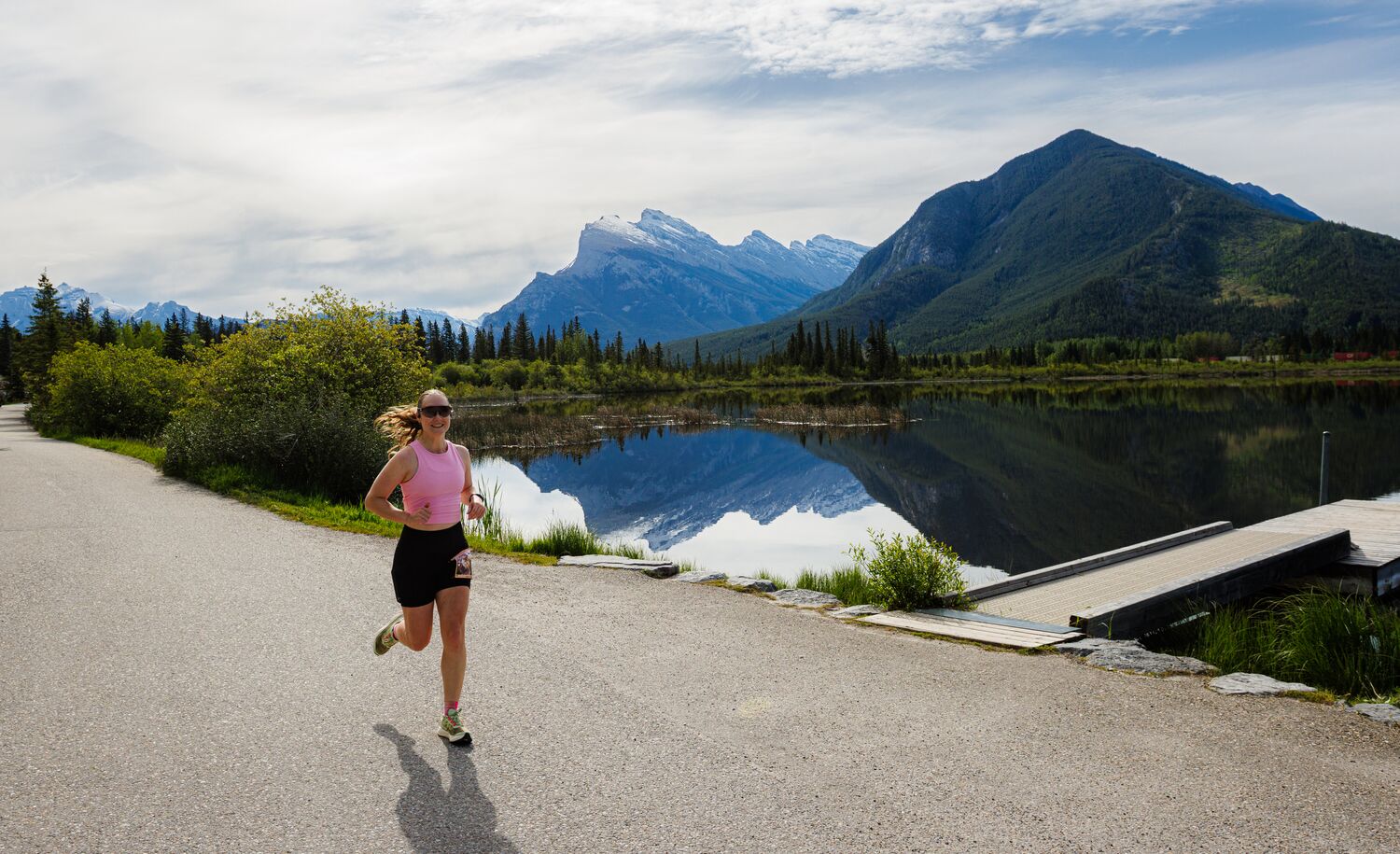
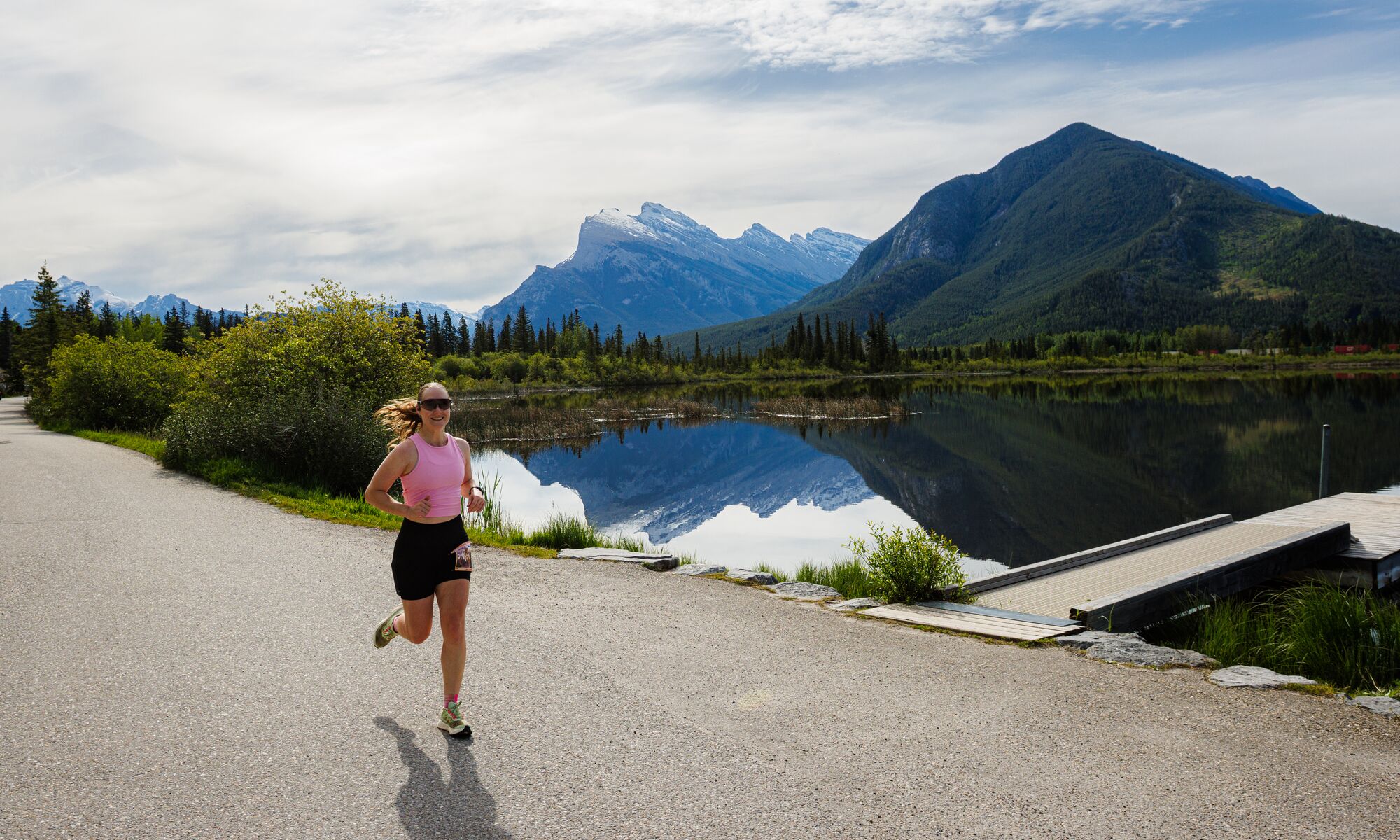
In summer, you can run farther across the beautiful landscapes of Banff National Park, venturing deeper into the backcountry and up to much higher elevations. As the snow melts, some of the most impressive trail running routes become accessible, revealing even more dynamic terrain.
At this time of year, Banff running trails wind past alpine meadows with colourful wildflowers, along serene lakes, and high up into the Canadian Rockies, with popular peaks like Castle Mountain and Mount Rundle in view.
Lace up your runners and head to Healy Pass, considered one of the best trails for wildflowers in Banff, for a 17km day with 650 meters of elevation gain through a forest and up into an alpine meadow.
The Lake Minnewanka Trail to Aylmer Lookout rolls along the shoreline, with views of the emerald lake encircled by mountains. Once you’re at the top, you’ll have a birds-eye view of Banff’s largest lake.
Take to one of Banff and Lake Louise’s top trails for your summer run.
Running Banff in Fall
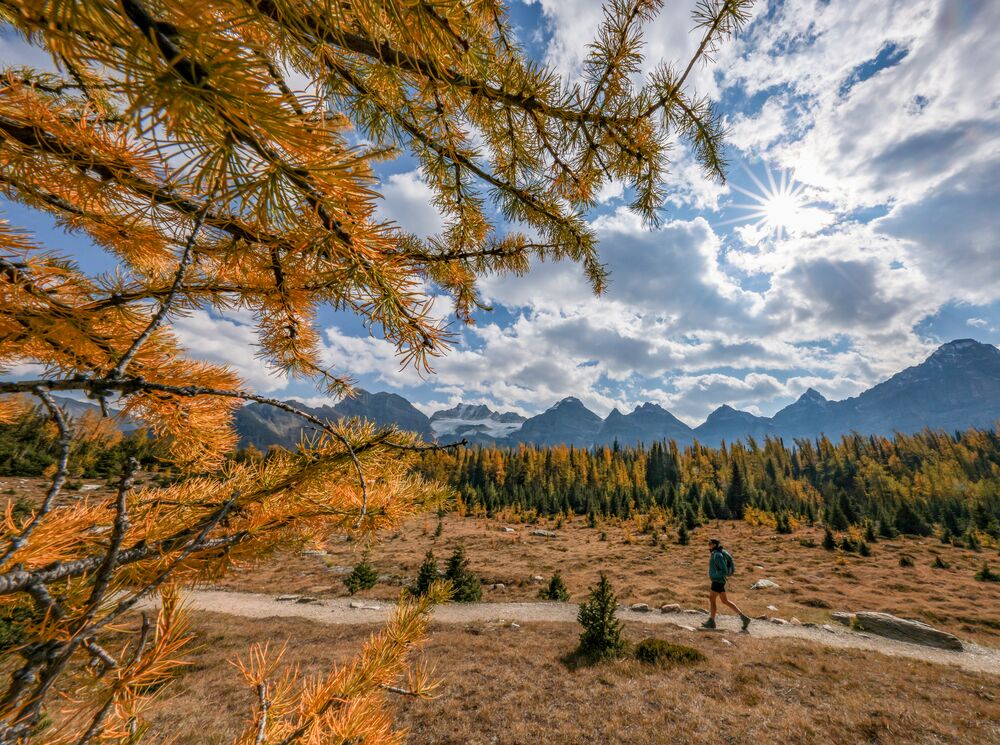
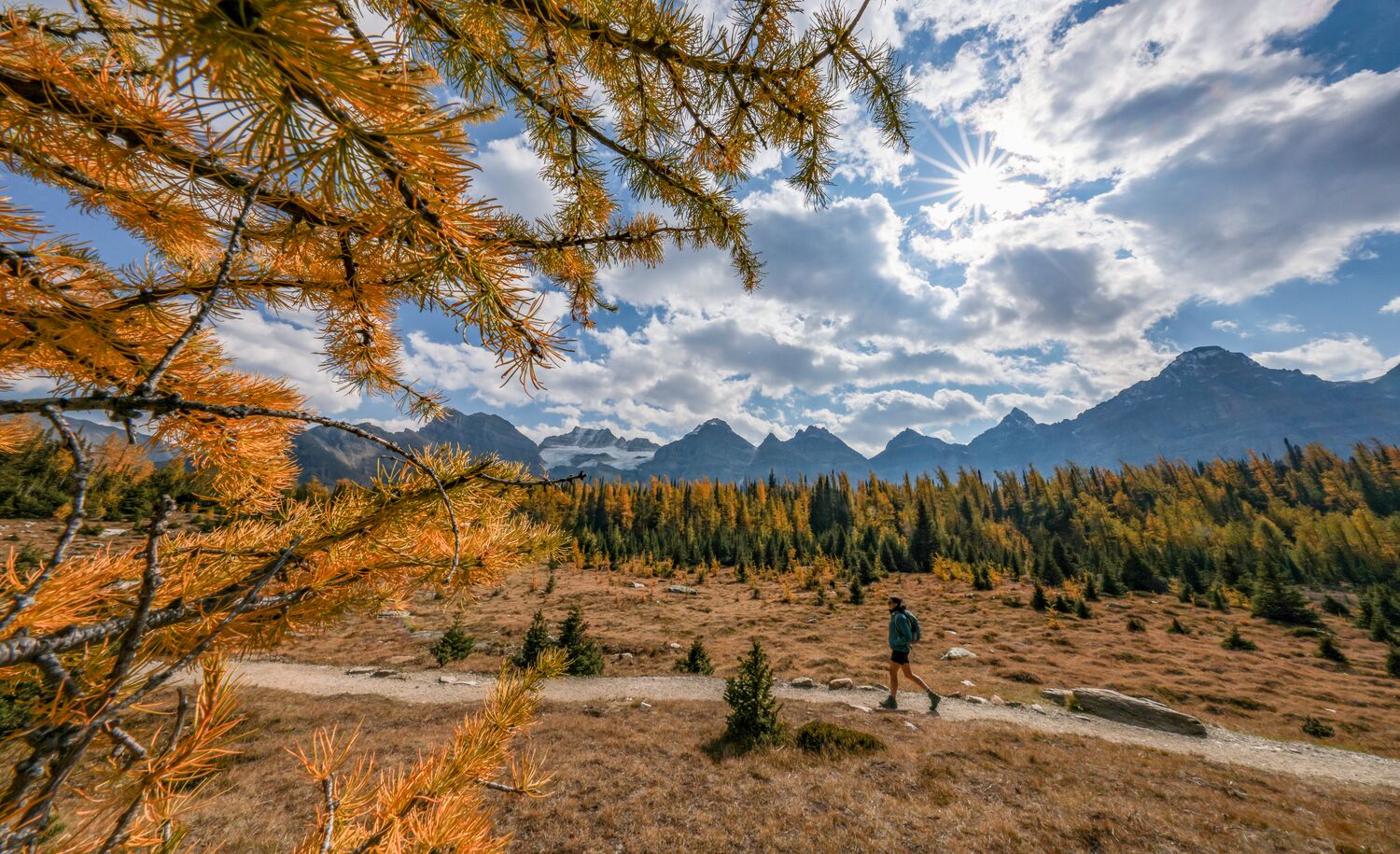
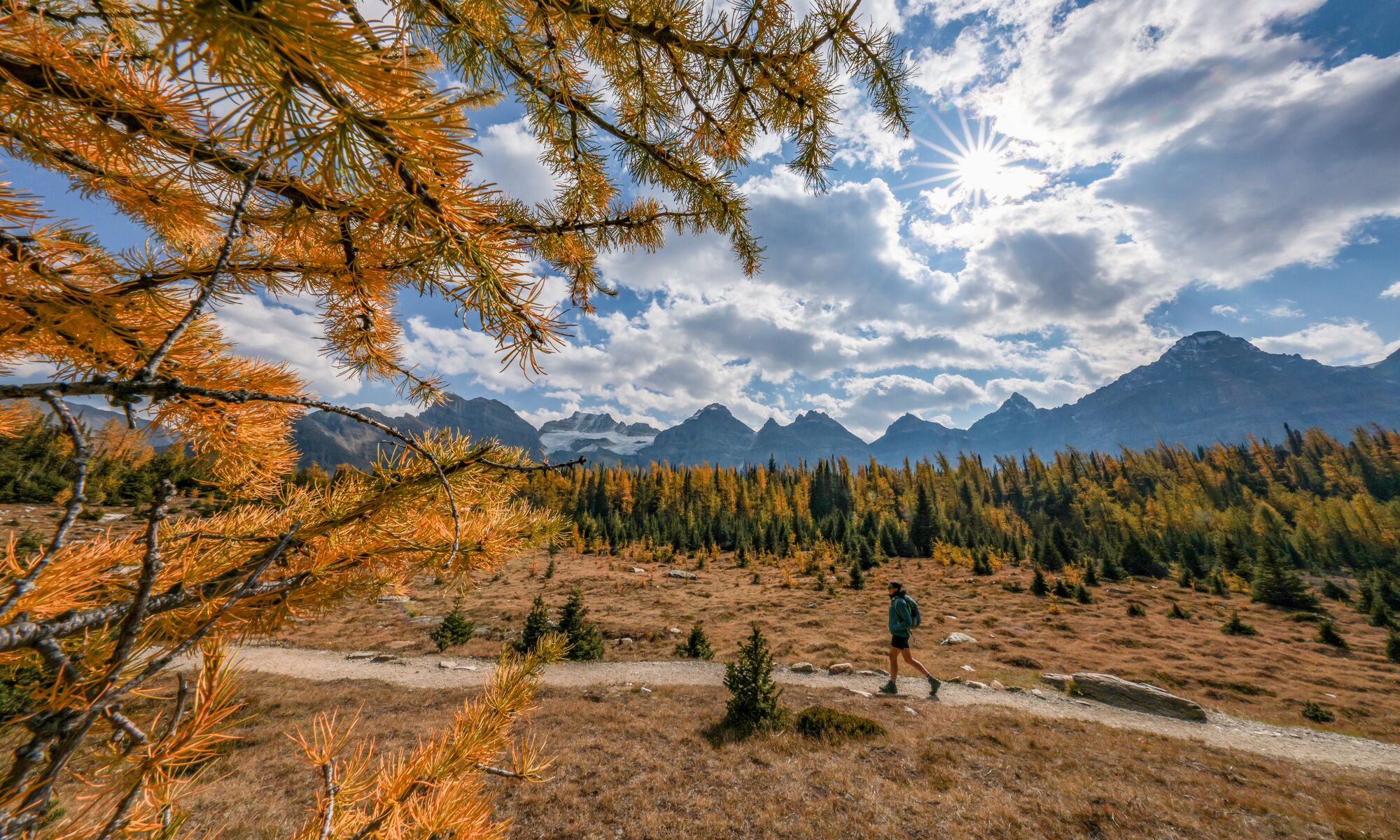
Once autumn arrives in Banff National Park, the golden larches make their show-stopping appearance, beckoning trail runners to witness nature’s colourful radiant display.
Take transit or a shuttle into Moraine Lake and run the aptly named Larch Valley, a 9km round trip through an alpine larch forest. The Taylor Lake trail climbs 585 meters over 6.3km, and takes you to a lakeshore surrounded by larch trees.
Cooler temperatures mean you can run for longer distances without overheating. As fall descends upon Banff, there’s always a chance of snow at higher elevations, so be prepared for winter-like conditions.


Running Banff in Winter and Spring
During the winter and spring, snow settles on the mountaintops and valley floors. Expect icy conditions and bring traction grips for the bottom of your shoes.
Winter running routes are centred around the Banff townsite, Bow River Trail and a few select trails with gentle grading. Johnson Lake is a great winter run that takes you on a 3km loop around the frozen lake with minimal elevation gain and great views of Cascade Mountain and Mount Rundle.


Where to Run in Banff National Park
Banff running features winding backcountry trails and picturesque paved roads throughout the park. Climb alpine trails to a tranquil teahouse in the mountains or enjoy gentle riverside trails.
With every kilometre under your feet comes new ways to see the sights of Banff National Park in a whole new way under your own power.


Trail Running in Banff National Park
Banff trail running means leaving the pavement behind for forested singletrack and alpine passes, all while taking in jaw-dropping mountain views. Go to higher elevations, where towering rock faces set the backdrop.
Perched on the spine of a glacial moraine, the family-run Plain of Six Glaciers Teahouse is an inviting place to stop on your run. Enjoy the view and refreshments to fuel up for the next leg of the journey.
The challenging Rockbound Lake trail climbs 9km (6 miles) to the base of Castle Mountain, surrounded by larch forests that turn golden in the fall.
Boom Lake is a moderate 12km (7.5 miles) trail run through the forest that offers views of the turquoise lake and Boom Mountain.


Road Running in Banff National Park
In Banff, running on the paved roads and multi-use pathways is scenic and pleasant. Run along open stretches of road with stunning views and wildlife sightings to enhance your run.
The Bow River Trail is a quiet stretch of riverside trail just steps from downtown Banff. Go on a tour of Banff and run to Bow Falls, around Central Park and across Banff’s two pedestrian bridges.
Vermilion Lakes Road, which is on the route of the Banff Half Marathon, is an out-and-back route known for its striking views of Mount Rundle. Include the Fenland Trail for a short, gentle off-road run in the trees on one direction of your run.
Meanwhile, the Legacy Trail is a relatively flat and long multi-use route that brings you from the Bow Valley Parkway to the Banff Park East Gate.


Banff Half Marathon and 10K
Going strong since 2013, the Banff Half Marathon and 10K is one of the most highly anticipated events in Banff National Park.
The road race, which attracts around 3,500 participants, takes place every June and winds through some of Banff’s most beautiful scenery, including the Bow River, Vermilion Lakes, Legacy Trail, and the famed Bow Valley Parkway. The event also features yoga, a kids race, and a health expo.
Registration for the Banff Half Marathon opens about a year in advance, and tiered pricing runs until the event sells out, which happens quickly. Sign up to receive an alert when race entries open.


Why Book a Guided Trail Run in Banff National Park
Take your adventure to new heights with an exclusive trail running tour that brings you to the most interesting running spots in Banff National Park.
Learn about the art of trail running and build your confidence under the gentle guidance of someone who knows the routes and safety protocols inside and out. Banff is home to many highly trained outdoor guides who help shape the vibrant mountain culture here. Not only are they experts in their field, but they are also passionate about Banff trail running.
Book a guided trail running trip to get insider knowledge about the best running routes, learn how to navigate the terrain, and listen to their interesting stories about the area.


What to Pack and Wear when Running in Banff National Park
Weather in Banff National Park is very dynamic. A sunny day can end with a bout of rain, or even snow. When you’re out on Banff running trails, bring and wear a few extra layers so you’re comfortable and prepared for anything:
- Moisture-wicking layers.
- Running shorts or pants.
- Compact waterproof jacket.
- A compact, insulated puffy jacket (for backcountry trails).
- Neck buff.
- Sunglasses.
- Running shoes with good ankle support (for trail or pavement, respectively).
What to Pack for Running
The running routes in Banff National Park travel through remote areas with limited or no cell service. Plan to be self-sufficient and gear up with the right equipment.
That all begins with what you pack for your adventure. These days, outdoor gear is lightweight and compact, so you can fit the essentials into your running vest if it has one or two larger pockets:
- Collapsible hiking poles (your knees will thank you).
- Yaktrax or other shoe traction grips (for winter running).
- Extra food and water (1 L per person).
- Navigation and communication (don’t just rely on your cell phone).
- Sun and weather protection.
- Small first aid kit.
- Headlamp or flashlight.
- Fire-making kit.
- Signalling device (a whistle or mirror).
- An extra top layer.
- Emergency shelter.
- Pocket knife or utility tool.
- Bear spray (easily accessible and know how to use it).
Outdoor retailers in Banff and Lake have a wide selection of brands and equipment to help you round out your running kit.


What to Know Before Running in Banff National Park
Before you Take to the Trails
Your first stop when planning a Banff running trip is to book a National Park Pass for the duration of your stay.
Research running routes ahead of time and choose a trail that fits within your physical fitness and skill level. Seasonality also comes into play for route selection, so choose a trail that’s appropriate for the time of year.
The night before, check the weather forecast, Parks Canada bulletins, and trail reports for the latest information.
Leave your trip plan with a trusted friend or family member before you set out.
On the Trail
Once you’re out there, shift into Park Mode. The choices we make on the trail can have a lasting impact on the environment and wildlife.
Follow Leave No Trace principles, like packing out your garbage, staying on the trail, and obeying signage. Though the wildflowers are beautiful, please don’t pick them or run through them.
If you do encounter wildlife, give them space and don’t feed them.
Wildlife Viewing and Safety Tips While Running in Banff National Park
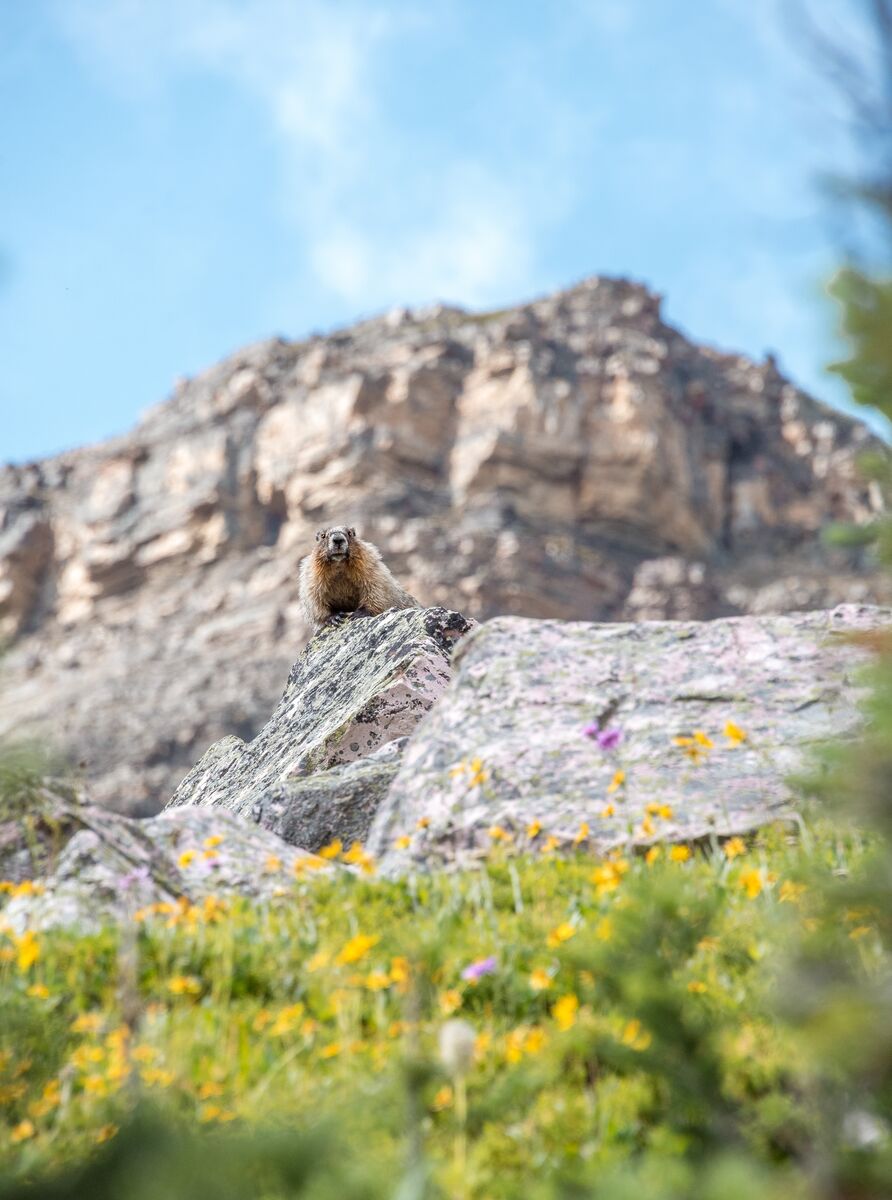
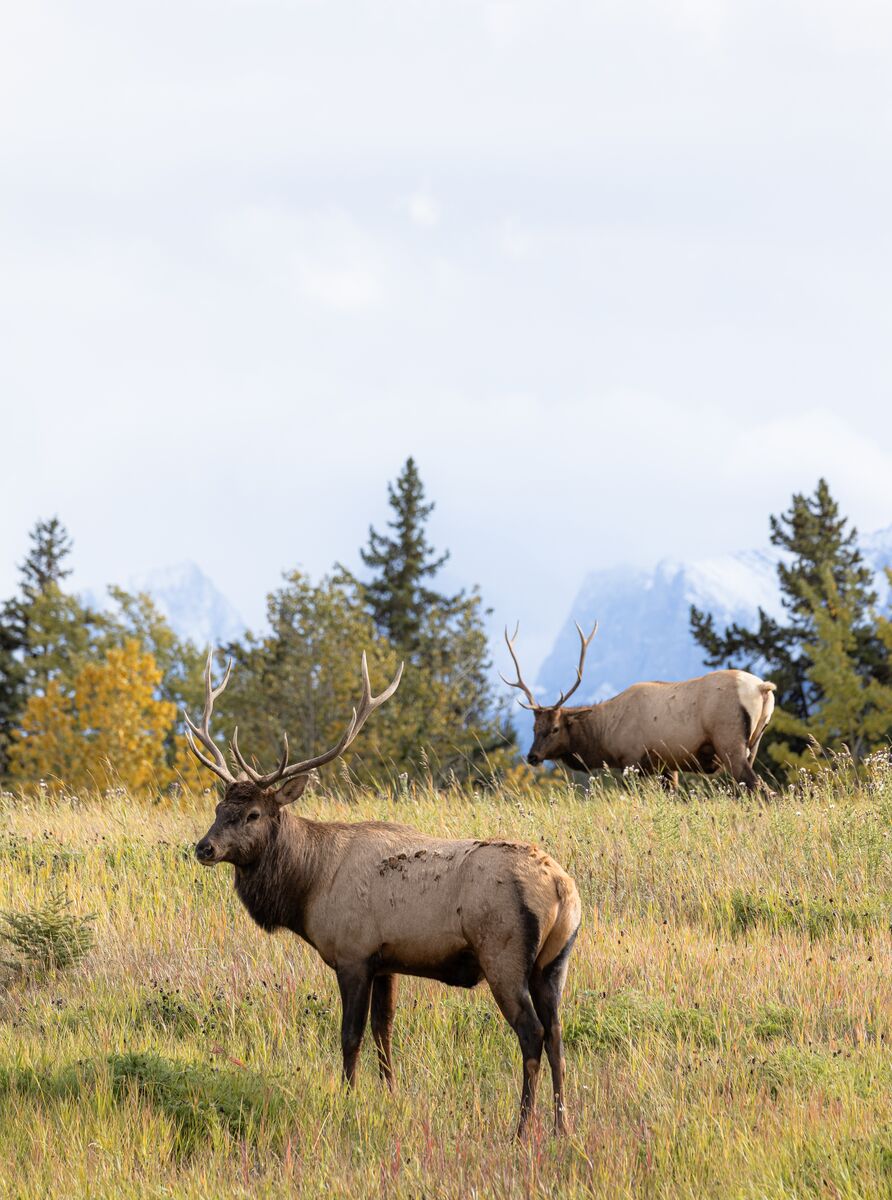
While you’re out on the Banff running trails, you’re likely to have a wildlife encounter, and your actions make all the difference. With vast wilderness in Banff National Park, you may see grizzly bears, moose, deer, or even small critters like marmots. Treat them with respect.
Keep wildlife wild by following these tips:
- Respect restrictions and closures on trails.
- Always run with a buddy.
- Make noise so animals can hear you coming.
- Don’t use headphones so you can hear animals and people coming.
- Keep your eyes looking down the trail, not at your feet.
- Be careful on blind corners.
- Give wildlife space when you do encounter them.
- Never feed wildlife.
Learn more about how you can keep wildlife safe and wild in Banff and Lake Louise.


How to Get to Your Running Trail in Banff National Park
Running destinations within Banff and Lake Louise are popular, especially in the summer. Parking is limited and can fill up fast. Thankfully, you don’t need a vehicle to get to the best trailheads in Banff National Park, so go car-free.
The Roam Public Transit system departs from the Banff townsite to many popular destinations. Or, take your workout up a notch and ride your bike to the trails.


How to Recover From Your Run in Banff National Park
Running in Banff National Park can be taxing on your body. Most trails have elevation, and some have lots of it. Take time to nourish your body, so you can enjoy everything the park has to offer.
Wind down after your Banff running adventure with a soothing soak in Banff and Lake Louise’s outdoor hot tubs and hot springs, followed by a refreshing cold plunge to get the blood flowing.
If you need a little extra self-care, book a post-run massage or wellness treatment at one of the spas in Banff and Lake Louise.


Plan Your Banff Running Trip
Whether you’re traversing a mountain pass through fields of wildflowers, summiting a rocky peak, or running along the riverbank at a leisurely pace, there’s a route for every runner that takes you to and through some of Banff and Lake Louise’s most iconic places.
If you aren’t sure where to go, or just want an extra running buddy, ensure you book a guided trail run.
Keep a lookout for wildlife and follow practical safety tips to make every moment count. After your run, treat yourself to a well-earned recovery, whether it’s a spa session or a soak with mountain views.
Running in Banff brings you closer to the park’s sweeping landscapes and deeper into nature all under your own power.
Plan Your Trip to Banff and Lake Louise
Start planning your dream trip to Banff and Lake Louise today with our easy to use Trip Builder. Curate you perfect trip from start to finish with accommodation, dining, activities, sightseeing adventures and more!